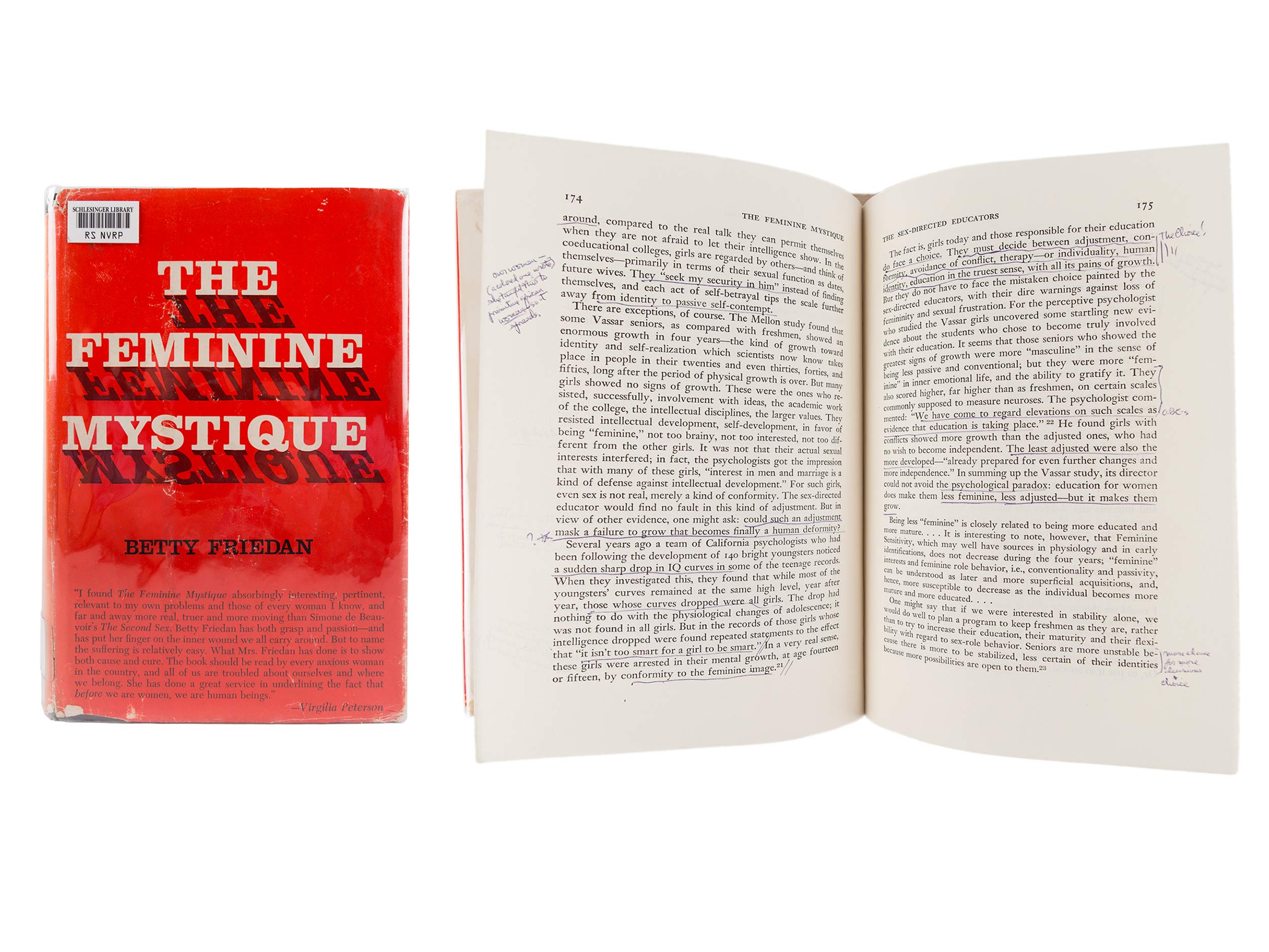
Alice Paul’s copy of Betty Friedan’s The Feminine Mystique, 1963

Photo by Kevin Grady/Radcliffe Institute
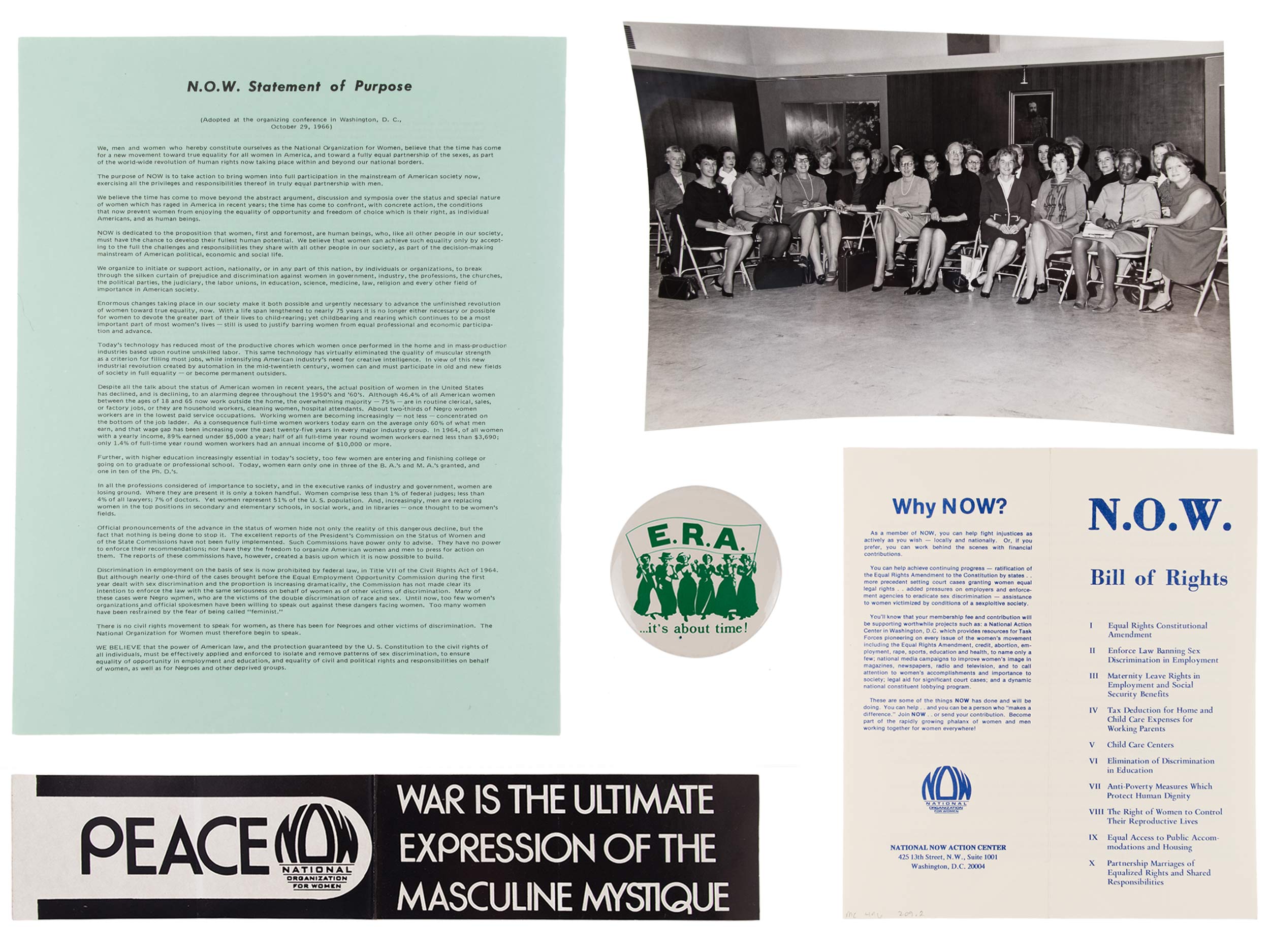
Sometimes the importance of a book goes beyond the text itself. Betty Friedan’s The Feminine Mystique, which connects the first- and second-wave feminist movements, was published in 1963 and widely credited with sparking the post–World War II women’s movement. This copy, which connects the first- and second-wave feminist movements, was owned and annotated throughout by the suffragist Alice Paul (1885–1977), founder of the National Woman’s Party and author of the original Equal Rights Amendment (ERA).
Friedan, Betty, The Feminine Mystique, New York: Norton, 1963
Catalog record:
http://id.lib.harvard.edu/aleph/000980689/catalog
Learn more:
Learn more about Betty Friedan.
Discover more about the Schlesinger Library's exhibit It Changed My Life: The Feminine Mystique at 50.
Watch a 2013 panel discussion held at the Radcliffe Institute: "Fifty Years after The Feminine Mystique":
The following three videos feature highlights from the Schlesinger Library's holdings about Betty Friedan:
Betty Friedan and the National Organization for Women:
Gerda Lerner's letter to Betty Friedan about her book, The Feminine Mystique:
Betty Friedan and the Presidential Commission on the Status of Women: